William John Brooks


Palimpsest, 2026
Print installation of intaglio prints.
Dimensions: 4.3m length x 1m width
Palimpsest, 2026, is a large-scale layered installation that conflates contemporary digital image-making with traditional intaglio print processes. The work captures fleeting radio transmissions and translates them into physical prints, arresting their ephemerality into tangible artifacts. By placing each layer over the next, the work deliberately disrupts the reception of the original recording; this accumulation generates a visual noise that mirrors the interference inherent in the radio spectrum.
Captured in Pembrokeshire, the source transmissions span fragmented music, speech, and the rhythmic pulses of local infrastructure and telemetry, reaching from the provincial to the distant. Crucially, the specific content of each layer is determined by chance, as the intaglio plates themselves served as resonant antennas, filtering the radio spectrum through their unique physical properties. This process provides distinct 'viewfinder(s)' into the immaterial and ethereal space of the airwaves, revealing the fragile pertinence of these connections to our contemporary existence.
The title, Palimpsest, refers to the constant reworkings of information across these frequencies, where the spectrum acts as a shared slate constantly rewritten by competing claims to attention. This mapping of the political tension inherent in the propagation of information transforms invisible transmissions into a tangible surface of overlapping histories. Here, distinct signals merge into a singular, complex texture that reveals the friction of these competing transmissions.
Print installation of intaglio prints.
Dimensions: 4.3m length x 1m width
Palimpsest, 2026, is a large-scale layered installation that conflates contemporary digital image-making with traditional intaglio print processes. The work captures fleeting radio transmissions and translates them into physical prints, arresting their ephemerality into tangible artifacts. By placing each layer over the next, the work deliberately disrupts the reception of the original recording; this accumulation generates a visual noise that mirrors the interference inherent in the radio spectrum.
Captured in Pembrokeshire, the source transmissions span fragmented music, speech, and the rhythmic pulses of local infrastructure and telemetry, reaching from the provincial to the distant. Crucially, the specific content of each layer is determined by chance, as the intaglio plates themselves served as resonant antennas, filtering the radio spectrum through their unique physical properties. This process provides distinct 'viewfinder(s)' into the immaterial and ethereal space of the airwaves, revealing the fragile pertinence of these connections to our contemporary existence.
The title, Palimpsest, refers to the constant reworkings of information across these frequencies, where the spectrum acts as a shared slate constantly rewritten by competing claims to attention. This mapping of the political tension inherent in the propagation of information transforms invisible transmissions into a tangible surface of overlapping histories. Here, distinct signals merge into a singular, complex texture that reveals the friction of these competing transmissions.
Clastic Resonance, 2025
Dimensions: 8m length x 6m width
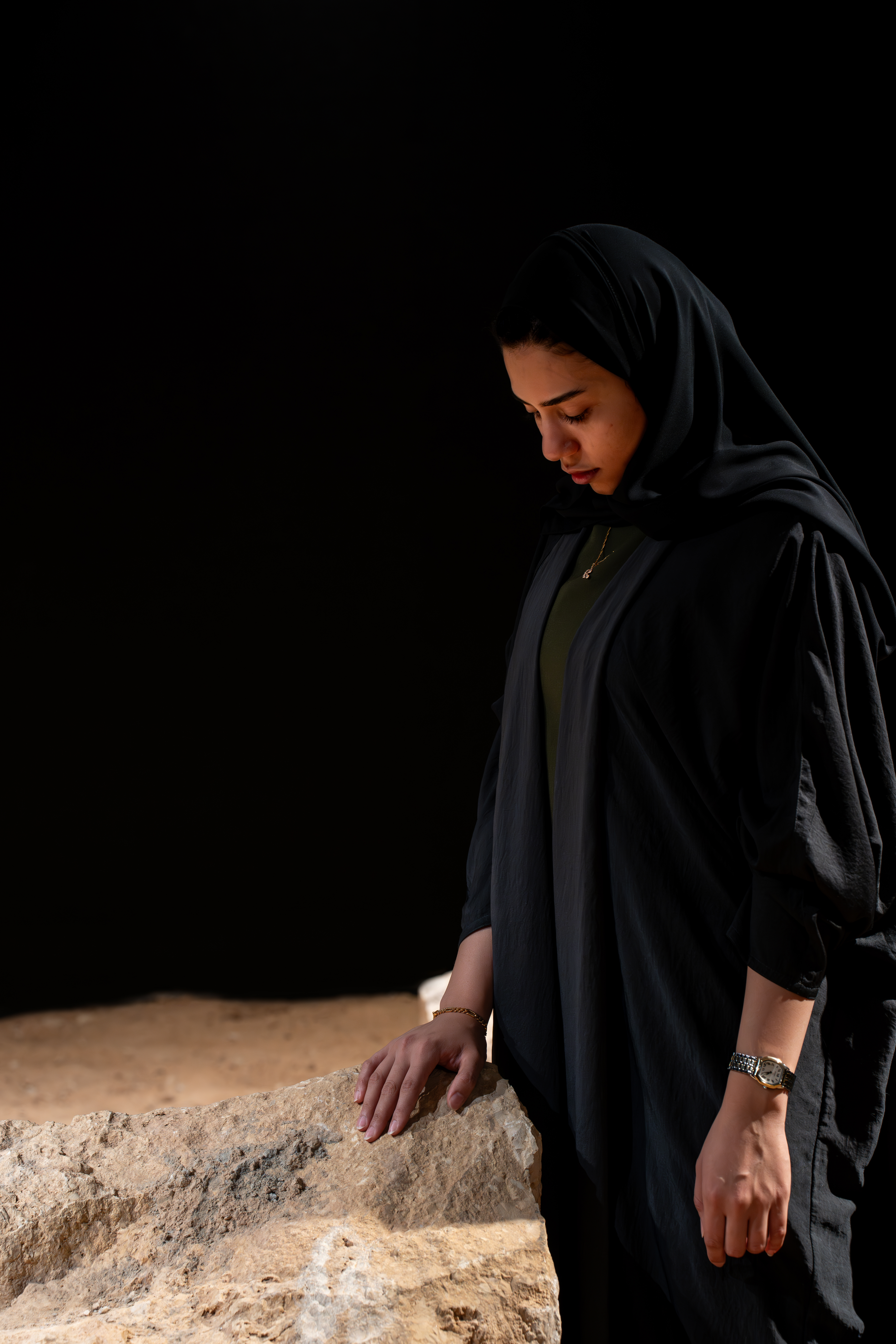
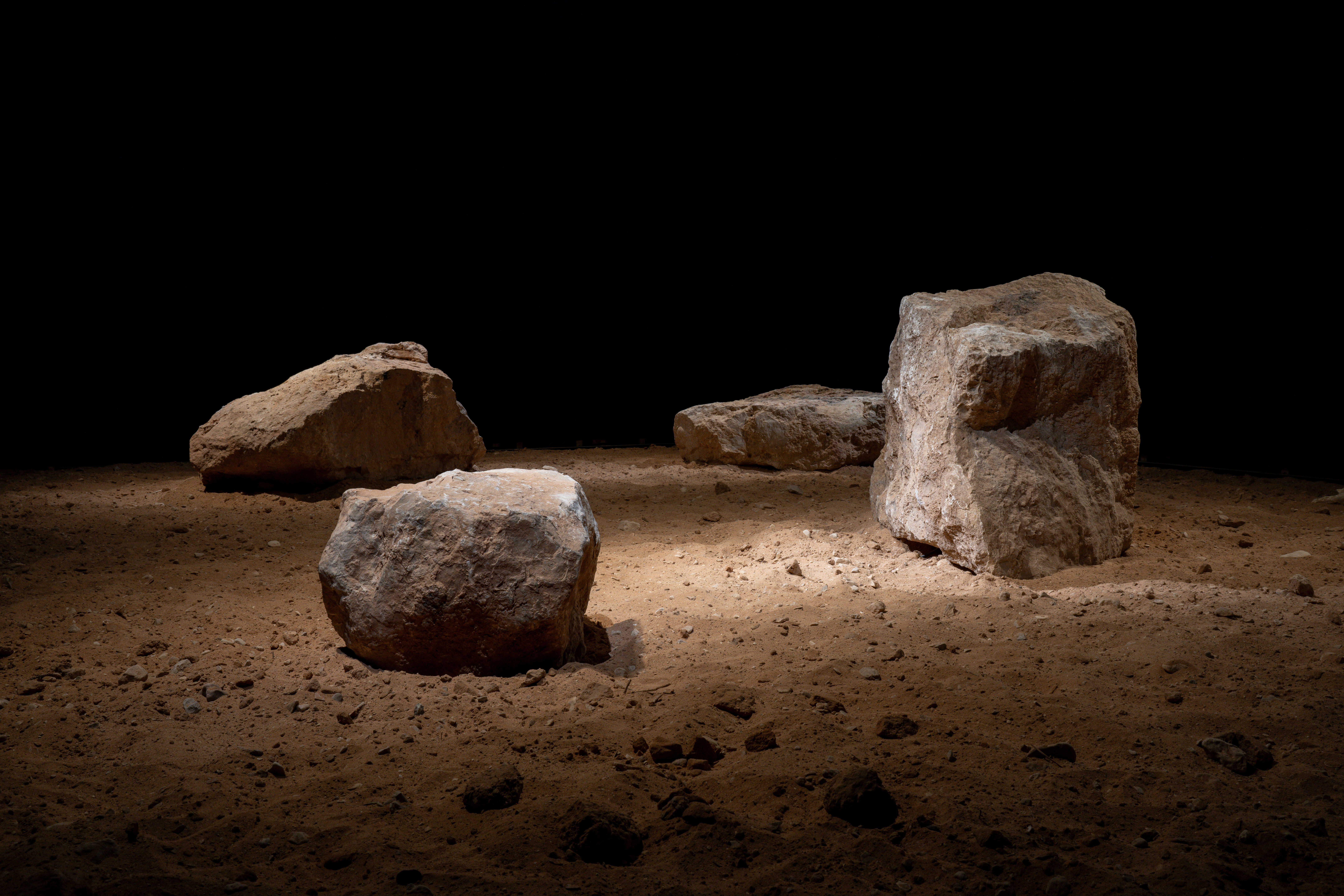
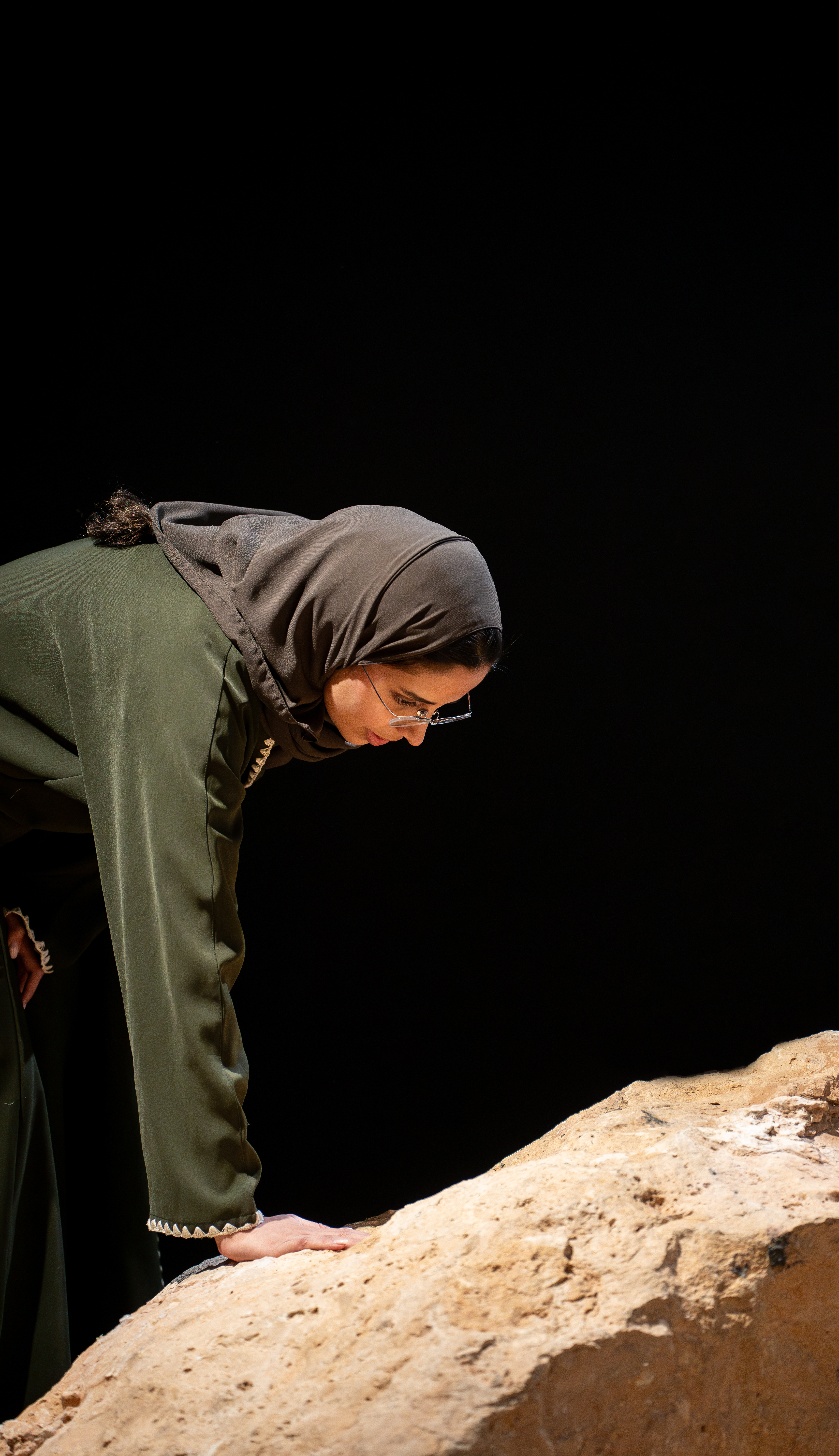
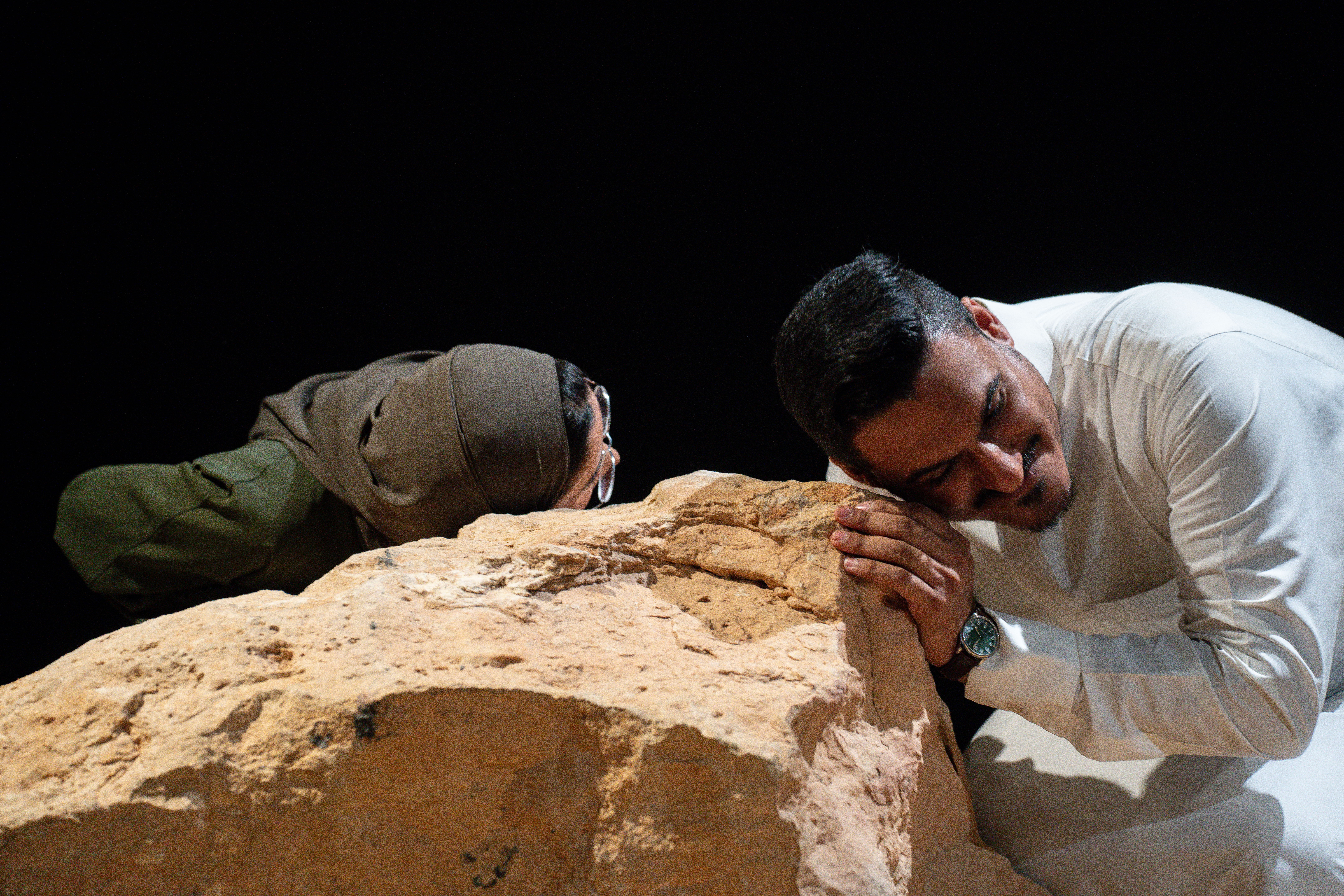
An interactive multi-channel haptic installation, comprised of (5) ‘Riyadh Sandstone’ boulders on a plain of sand, each resonating with low-frequency sounds recorded from the vast urban development that Saudi Arabia is currently undertaking.
Using contact transducers embedded in the sandstone, the installation transforms each stone into a resonant body. The highly localized transmission of sound, barely perceptible at distance, requires the audience to reveal the sonic nature of the installation by interacting with the materiality of each natural form; placing their hands or body against the stones to perceive the resonance, reshaping the act of listening, from an auditory experience into a haptic, embodied encounter.
Experiencing Riyadh’s soundscape, Brooks became increasingly aware of how sound marks a place—most notably through the call to prayer, a cultural phenomenon unfamiliar to him back home. This heightened sensitivity made him more attuned to the city’s rapid physical transformation and the sonic impressions it leaves in its wake. He started questioning how the sounds of construction and industry impinge upon the natural landscape. What traces do these activities leave behind, not just in memory but in material. This project examines that relationship by using Riyadh sandstone—an enduring geological presence—as a surface that carries the low-frequency resonances of urban expansion. By transmitting these vibrations through stone, the work shifts listening beyond the auditory and into a haptic experience. Visitors engage directly, pressing hands or ears against the surface to perceive the ephemeral echoes of a changing city. The project negotiates the relationship between the enduring natural material landscape and the transient sonic nature of a city in flux, inviting reflection on the anthropogenic impressions left upon the land.
Exhibited as part of the inaugural Diriyah Arts Futures: Emerging New Media Artists 2025, Riyadh, Saudi Arabia.
Dimensions: 8m length x 6m width
An interactive multi-channel haptic installation, comprised of (5) ‘Riyadh Sandstone’ boulders on a plain of sand, each resonating with low-frequency sounds recorded from the vast urban development that Saudi Arabia is currently undertaking.
Using contact transducers embedded in the sandstone, the installation transforms each stone into a resonant body. The highly localized transmission of sound, barely perceptible at distance, requires the audience to reveal the sonic nature of the installation by interacting with the materiality of each natural form; placing their hands or body against the stones to perceive the resonance, reshaping the act of listening, from an auditory experience into a haptic, embodied encounter.
Experiencing Riyadh’s soundscape, Brooks became increasingly aware of how sound marks a place—most notably through the call to prayer, a cultural phenomenon unfamiliar to him back home. This heightened sensitivity made him more attuned to the city’s rapid physical transformation and the sonic impressions it leaves in its wake. He started questioning how the sounds of construction and industry impinge upon the natural landscape. What traces do these activities leave behind, not just in memory but in material. This project examines that relationship by using Riyadh sandstone—an enduring geological presence—as a surface that carries the low-frequency resonances of urban expansion. By transmitting these vibrations through stone, the work shifts listening beyond the auditory and into a haptic experience. Visitors engage directly, pressing hands or ears against the surface to perceive the ephemeral echoes of a changing city. The project negotiates the relationship between the enduring natural material landscape and the transient sonic nature of a city in flux, inviting reflection on the anthropogenic impressions left upon the land.
Exhibited as part of the inaugural Diriyah Arts Futures: Emerging New Media Artists 2025, Riyadh, Saudi Arabia.
Radio Tapestry II

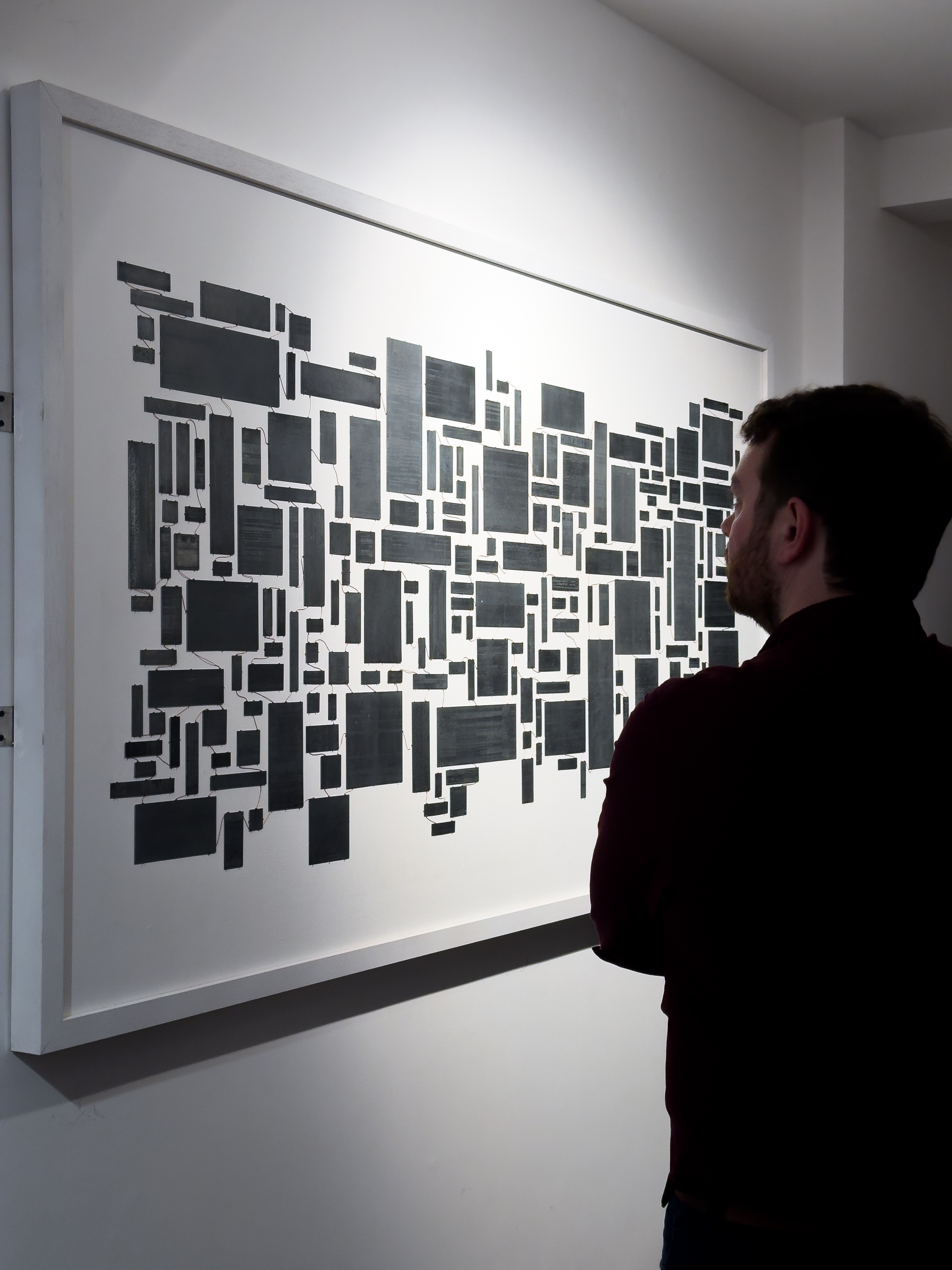

Radio Tapestry II, 2024
Etched zinc plates with copper windings.
Dimensions: 2.2m length x 1.2m width
A collection of photographic etchings of wireless transmissions received in Pembrokeshire, South West Wales.
Each plate, used for its conductive properties, depicts a moment of reception; a material representation of transient signals. These collated artefacts offer insight into what I refer to as the ‘Radio Frequency Landscape’—a non-optical space that carries our wireless identities, interactions, and existence in the digital age.
Shortlisted, and exhibited. as part of the Gilchrist-Fisher Award 2024 at the Rebecca Hossack Gallery, Fitzrovia London.
Etched zinc plates with copper windings.
Dimensions: 2.2m length x 1.2m width
A collection of photographic etchings of wireless transmissions received in Pembrokeshire, South West Wales.
Each plate, used for its conductive properties, depicts a moment of reception; a material representation of transient signals. These collated artefacts offer insight into what I refer to as the ‘Radio Frequency Landscape’—a non-optical space that carries our wireless identities, interactions, and existence in the digital age.
Shortlisted, and exhibited. as part of the Gilchrist-Fisher Award 2024 at the Rebecca Hossack Gallery, Fitzrovia London.